I decided to read the novel no longer human by Dazai Osamu for my self-education project. I wanted to reread this novel for a long time. I read it a while back but didn’t understand it fully at the time because of my age and the concepts that are talked about in the novel. After I reread it, I really love this novel. Although it contains sensitive topics, it’s a really interesting read. Let me go into detail.
i first would like to interduce the writer of this novel Dazai Osamu.
Writer
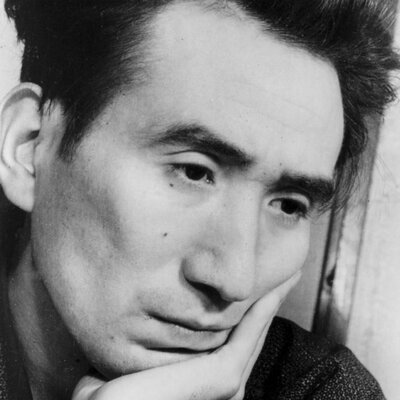
Dazai Osamu, (born June 19, 1909, Kanagi, Aomori prefecture, Japan—died June 13, 1948, Tokyo), novelist who emerged at the end of World War II as the literary voice of his time. His dark, wry tone perfectly captured the confusion of postwar Japan, when traditional values were discredited, and the younger generation nihilistically rejected all of the past.
Born in northern Japan, the sixth son of a wealthy landowner and politician, Dazai often reverted to his background as material for his fiction. Although the dominant mood of much of his writing was gloom, he was also famed for his humor, which sometimes approached farce. Dazai’s first collection of short stories, Bannen (1936; “The Twilight Years”), showed him to be potentially a versatile writer of many styles and topics, but he tended toward the shishōsetsu (“I,” or personal fiction) form, and the persona of the author was thenceforth to be seen in most of his fictional characters. Dazai was deeply concerned with his craft, and his stories were far from being mere confessional documents; nevertheless, his artistry was often obscured by the wide publicity given to his dissipation, a source of continued attraction, especially to youthful readers. Almost alone among Japanese writers, Dazai continued to produce works of real literary merit during the war years (1941–45). Otogi zōshi (1945; “Fairy Tales”), new versions of traditional tales, represented a triumph of his style and wit. Tsugaru (1944; Return to Tsugaru) was a deeply sympathetic memorial to his place of birth. The tone of his postwar works—Shayō (1947; The Setting Sun), Biyon no tsuma (1947; Villon’s Wife), and Ningen shikkaku (1948; No Longer Human), all translated by Donald Keene—becomes increasingly despairing, reflecting the emotional crisis of the author. After several unsuccessful attempts earlier in his life, Dazai committed suicide in 1948, leaving uncompleted a novel ominously entitled Goodbye.
Plot
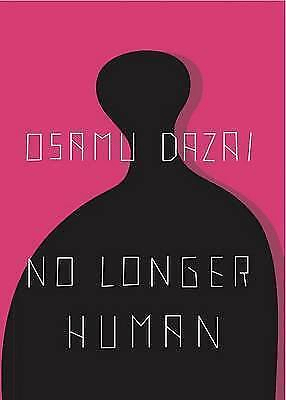
No Longer Human also translated as A Shameful Life, is a 1948 novel by Japanese author Osamu Dazai. The original title translates as “Disqualified as a human being “or “A failed human”.
The story of Yozo Oba, a young man who is unable to connect with others due to a deep sense of alienation and emptiness. The novel is divided into three parts, each of which focuses on a different stage of Yozo’s life. In the first part, Yozo is a young boy who is constantly scolded and physically abused by his parents. He finds solace in drawing and creating imaginary worlds, but this only further alienates him from those around him. In school, he develops a reputation as a class clown, but his humor is really a mask to hide his inner pain.
In the second part, Yozo attends art school in Tokyo, where he meets Horiki, a charismatic and carefree classmate who introduces him to a world of drinking, womanizing, and reckless behavior. Yozo becomes addicted to alcohol and begins to live a hedonistic lifestyle. He is unable to form meaningful connections with anyone, including Horiki, and feels increasingly isolated and alone.
In the final part, Yozo has hit rock bottom. He has lost his job, his wife has left him, and he is plagued by hallucinations and suicidal thoughts. He seeks treatment in a mental hospital, where he meets a sympathetic doctor who tries to help him overcome his feelings of despair. Yozo tries to turn his life around, but ultimately realizes that he is too damaged and broken to ever truly connect with others.
Characters
The novel is told through the perspective of the protagonist, Yozo, who is a troubled and self-destructive young man struggling to find his place in society.
Yozo is a chronic liar who masks his true emotions and identity in order to fit in with those around him. He struggles with a sense of alienation from the world and those around him, and he is unable to connect with others on a meaningful level. Yozo’s inability to form genuine relationships causes him to become increasingly isolated and self-destructive, and he turns to alcohol and other vices as a means of coping with his despair.
Throughout the novel, Yozo struggles to come to terms with his own identity and his place in society. He is haunted by a sense of inadequacy and feels that he is fundamentally flawed in some way. This leads him to become increasingly withdrawn and detached from the world, and he ultimately spirals into a state of total despair.
Other characters in the novel include Yozo’s lovers, friends, and family members, who all struggle to understand him and his motivations. These characters often serve as foils to Yozo, highlighting the ways in which he is different from those around him.
Summary
It tells the story of a troubled man incapable of revealing his true self to others, and who, instead, maintains a facade of hollow jocularity, later turning to a life of alcoholism and drug abuse before his final disappearance. The novel deals with themes of identity, alienation, and the struggle to find meaning in life. Yozo’s story is a tragic one, as he is never able to find the acceptance and love he so desperately craves. The novel is a powerful exploration of the human condition, and the ways in which we can all feel lost and disconnected at times.
Quotes
Here are some quotes that stuck with me.
- “As long as I can make them laugh, it doesn’t matter how, I’ll be alright.”
- “What is society but an individual? […] The ocean is not society; it is individuals. This was how I managed to gain a modicum of freedom from my terror at the illusion of the ocean called the world.”
- “As long as I can make them laugh, it doesn’t matter how, I’ll be alright. If I succeed in that, the human beings probably won’t mind it too much if I remain outside their lives. The one thing I must avoid is becoming offensive in their eyes: I shall be nothing, the wind, the sky.”
- “There are some people whose dread of human beings is so morbid that they reach a point where they yearn to see with their own eyes monsters of ever more horrible shapes.”
- “For someone like myself in whom the ability to trust others is so cracked and broken that I am wretchedly timid and am forever trying to read the expression on people’s faces.”
My opinion/recommendation
Right of the bat i would like to say that this novel is not for everyone because of everything going on in this novel as much as i try to explain it in my words it is definitely a different experience reading it and just processing the words and everything. Overall, “No Longer Human” is a powerful exploration of the human condition, and it offers a deeply insightful look into the mind of a troubled and self-destructive individual.
It is a compelling read for anyone interested in exploring the complexities of human nature and the ways in which society can impact our sense of identity and self-worth. I do recommend this novel but as i mentioned if might be some topics that are triggering for you i don’t recommend reading it. This novel is considered being a classic in Japanese literature hence why i read it in the first place because I’m interested in literature from different countries. In conclusion this novel was something to read and i do want to read more novels from Dazai Osamu.

 ԱՐԱՔՍ ՔԱԼԻՋՅԱՆ